Online dating: Humour matters more than 'good looks' but immigrants struggle with local jokes - The Conversation CA
Online dating: Humour matters more than 'good looks' but immigrants struggle with local jokes - The Conversation CA |
- Online dating: Humour matters more than 'good looks' but immigrants struggle with local jokes - The Conversation CA
- Review: 'Love Fraud' Traces The Hunt For An Alleged Con Man - NPR
- The Knot Future of Relationships and Weddings Study Offers Insight Into Gen Z and Younger Millennials' Attitudes and Expectations of Relationships, Weddings and Marriage - Odessa American
| Posted: 31 Aug 2020 06:17 AM PDT Online dating platforms have witnessed a surge of users and activities during the COVID-19 pandemic. The lockdown restrictions and physical distancing protocols have changed the way people work and live — but also how they date. Dating from home may help some singles stay connected, cope with anxiety and meet "summer love" in this isolating time. As the virus shifts even more people to online dating, perhaps you are wondering what the secret is to standing out? Before COVID-19, we conducted a research project about people's experiences of online dating in Vancouver. What we found during our in-depth interviews may help answer that question. Our study suggests that writing something short but witty on your profile will help you stay in the game. Many of our research participants highly valued a sense of humour in potential partners. Humour matters more than 'good looks'Even if your online profile pictures are conventionally attractive, humour matters. Other research has also shown that dating candidates who show a good sense of humour receive higher ratings of attractiveness and suitability as long-term partners. We also discovered something else during our interviews. We experienced many awkward moments when our respondents gave examples of funny instances. As immigrant interviewers, we just didn't get the jokes. When we asked for clarification, our research participants described humour as a coded language that was "hard to explain." We often found ourselves Googling after our interviews to figure out what some jokes meant. These moments triggered new questions for us. Could the desire for humour along with the snap-decision culture of online dating potentially create a divide between immigrants and people born and raised in Canada? Could the desire for humour also impact other areas besides online dating? 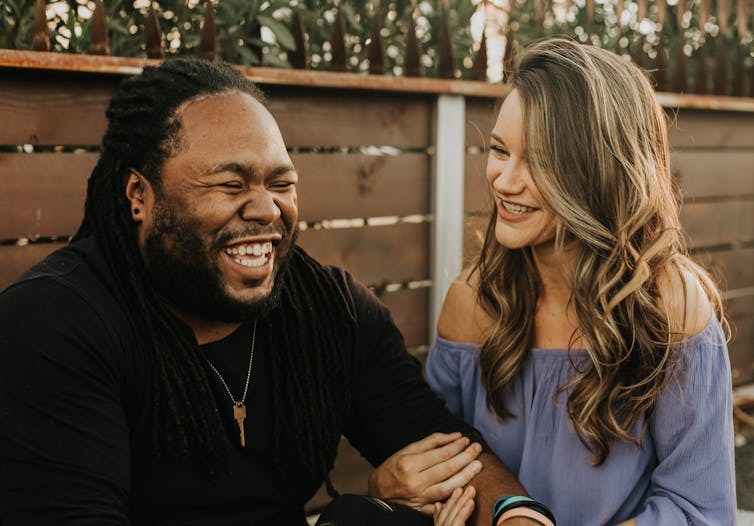 Humour as a cultural divideFrom 2018-19, we interviewed 63 men and women in Vancouver who had used online dating sites or apps to look for different-sex relationships. About half of our respondents were Chinese immigrants (most of whom had arrived in Canada as adults). The other half were born in Canada and were from diverse racial and ethnic backgrounds. The majority of Canadian-born respondents in our study — 81 per cent — used humour as a primary screening criterion in evaluating potential partners online. Many said they were able to quickly decide whether to like or pass on profiles, depending on whether a dating candidate appeared to be humorous. In contrast, less than 20 per cent of Chinese immigrants mentioned humour as something important. When we asked our Canadian-born research participants why being funny or witty was so important to them, some told us: "I just want to be with someone who is fun to be with." They said being funny or witty required "smartness," a "fast grasp of relevance," "divergent thinking" and "intelligence." When screening profiles, exchanging messages or meeting offline, respondents looking for humour found clues to evaluate the funniness of dating candidates. They believed this humour could be communicated, for example, through a self-deprecating introduction or picture, a joke based on a TV show or a witty use of puns. Respondents often stressed that their desire for humour was a personal preference. But is it? What is humour?Humour is inherently a social construct. Being humorous requires a lucid linguistic fluency and years of cultural learning. Being able to appreciate each other's humour requires people to have similar experience and share cultural references such as popular books and TV shows. In sociology, this is called cultural capital. People from different backgrounds likely accumulate different cultural capital and so have different perceptions of humour. The Canadian-born respondents in our study were open to dating both immigrants and people born in Canada, as long as their partners were able to hold a good conversation based on humour. Nevertheless, the expectation for their partners to possess humour in the Canadian context requires a lot of cultural capital that many immigrants may not have (especially those who are newcomers). Adult newcomers commonly face challenges like language barriers, cultural shock and isolation. Many immigrants — even those who came to Canada early in life — live in ethnic enclaves and have segregated social networks. They may not be able to integrate into so-called "mainstream" culture. Looking for humour in these fast-paced online environments can become a process of boundary-making between Canadians and immigrants. Beyond online datingThe findings of our study might be applied beyond online dating. In western contexts, especially, humour is used as a way to evaluate people in many situations. Current research is mixed on the benefits of humour when it comes to physiological well-being, relationship satisfaction and workplace harmony. Yet humour is commonly regarded as a character strength. Humour is also found to increase evaluation ratings and promote career success.  For immigrants who represent more than 20 per cent of Canada's total population, how long does it take for them to get and crack a "Canadian" joke? We have spent almost a decade in North America. Yet it's not easy for us to understand certain jokes. If we feel this way, how long does it take for newer immigrants with less language proficiency and cultural capital than us to remain part of a conversation? If humour is used in evaluating cultural fit in friendships, romantic relationships and employment, how long does it take for immigrants to navigate the culture of humour when making friends, seeking future partners or looking for jobs? During COVID-19, a spike of xenophobia has challenged Canadians to reflect on the biases in our multicultural society. Reflecting on the implicit biases we hold when preferring someone who has an obvious "Canadian" sense of humour may also help to prevent divisions among us.  |
| Review: 'Love Fraud' Traces The Hunt For An Alleged Con Man - NPR Posted: 31 Aug 2020 04:01 AM PDT  Carla Campbell is a bounty hunter with a mission in the new series Love Fraud. Alex Takats/Showtime hide caption  Carla Campbell is a bounty hunter with a mission in the new series Love Fraud. Alex Takats/ShowtimeLess than five minutes into the four-episode Showtime documentary series Love Fraud, a woman named Tracy says, "There's no excuse not to have teeth these days." She's talking about online dating and literal teeth, about arriving for a date with a man she found online and realizing he didn't have teeth. But could you take this as a little bit of a mission statement for the series? You could. The story, as told by a number of women who knew Richard Scott Smith over many years, goes like this: He found women online, began dating them, very quickly got very serious about them, and eventually married them. He married a bunch of them, sometimes simultaneously. He got access to their money in a variety of ways, got them to assume debts with him for houses or cars or businesses, and then he simply scooted, and they couldn't find him. Take note: He denies that he was ever dishonest or ever defrauded anyone, even though he admits to some of the details of his pursuits and marriages. And the directors of the series, Heidi Ewing and Rachel Grady (who made the Oscar-nominated Jesus Camp, among other things) have to be somewhat imprecise about the number of women who were affected, because no one is exactly sure. But the series isn't really about Smith. The series is about these women, who managed to find each other after one of them started a blog about him. Who found a way to put some teeth into their frustrations, as it were. And it's really the accumulation of stories from women that begins to shed light on how Smith seems to have operated. The allegations are less about one big score that made him rich, and more about commingling finances through marriage so you can take a little from this one, a little from that one, a little from the new one, and then just keep it moving. Under that explanation, the repeat marriages make perfect sense, because once you marry someone, a lot of the shenanigans of which he's accused become not just easier, but legal. The woman who explains this is Carla. She has this to say about Smith's modus operandi: "He did not run off with millions of dollars at all ... He makes enough money to support his habits, like new trucks and new Harleys. He's a good con man, but he's not a big-dollar con man. He's a nickel-and-dime con man. He goes after middle-income women that have just enough money to make him look good. Meanwhile, he drains them of everything they've worked their whole life for, and it's not that much." Carla isn't one of Smith's many wives. She's a bounty hunter. You might be accustomed to seeing bounty hunters who are men — burly men, men in windbreakers with big shoulders. Carla isn't like that; she's an older woman with long gray hair who works in bail bonds. She also says that she was beaten by a man long ago, and it made her particularly pleased to go after men who hurt women. And so she ends up working with the Rick Smith accusers, who have found each other through a blog that one of them started to warn women away from him. Because it's not just a matter of proving the things they say he did to them; it's a matter of figuring out where he is. Smith is hard to find, and even after he gets probation and disappears, the crimes of which he's accused don't seem to be getting much traction with law enforcement or the legal system. And so: a bounty hunter. One who's willing to work for free, because she hates men who abuse women. There's a little bit of ambiguity in the series around the question of when the filmmakers entered this story. According to an article in Vanity Fair, they "were captivated once they discovered that Smith's discarded spouses had banded together as a kind of 'revenge squad,' commandeered by Carla Campbell, a straight-shooting, hard-smoking bounty hunter." But in the film, it certainly looks like the cameras are there for the women's first meeting with Carla where she agrees to take on the case. It may just be a matter of having asked the women to restate their agreement, but it would have been good to have a little bit more clarity about what exactly we're looking at. What we do know is that the filmmakers eventually became full participants in the squad that was trying to find Smith. They even hired private investigators to help track him. It's interesting to watch this series while HBO is running The Vow, about the NXIVM "self-improvement" group whose leader was convicted in 2019 of sex trafficking, racketeering and other charges. Both series take pains to try to understand what it is that makes people susceptible to pitches that, in the cold light of day, may seem obviously fishy. With NXIVM it was maybe the expectation that you call the leader "Vanguard," while with Smith it was his sudden declaration of love and a desire to share a checking account after only a short courtship. But the filmmakers in both cases want to shed light on the fact that everyone has vulnerabilities, whether they have abundant resources or not. Sometimes you don't have to meet a genius to feel taken advantage of; just a person who knows how to recognize what you want and haven't ever had, whether it's someone who says they love you or someone who tells you that your life can have abundant and profound meaning. We underestimate sometimes how much of our safety depends on people simply not deciding to try too hard to take it away. It doesn't seem like Richard Scott Smith was a genius, or was possessed of exceptional charm or looks. What he had in his arsenal was tenacity and commitment to the way he'd decided to live his life. Well, that and a deep reservoir of self-pity where you might expect a sense of shame or remorse to be. Love Fraud premiered on Showtime on Sunday night and is available on demand.  |
| Posted: 31 Aug 2020 07:48 AM PDT NEW YORK--(BUSINESS WIRE)--Aug 31, 2020-- The Knot, a leading wedding planning and registry resource, today released its Future of Relationships and Weddings Study. It offers insight into the attitudes and expectations of 18 to 29 year olds—an age group defined as both Gen Z and younger millennials—toward relationships, weddings and marriage. The study, which surveyed those dating or currently in a relationship, unveiled that approximately half of Gen Z and millennial respondents want to be financially independent and build a successful career before marriage, while just over 30% want to purchase a home. Additionally, the majority of Gen Z and millennials believe sharing the same family values (69%) and relationship views (68%) as their future spouse is twice as important as sharing the same race (26%), ethnicity (26%) or political views (32%). They also believe they are more likely to meet "the one" through friends, school or in a social setting vs. online dating or dating apps. "As we usher in a new generation of to-be-engaged couples—and then, to-be-weds—we're expecting that Gen Z and younger millennials will continue to shatter social norms and make their own traditions when it comes to their future weddings and marriages," said Kristen Maxwell Cooper, editor in chief of The Knot. "We look forward to seeing more couples—no matter their sexual orientation—incorporate mixed-gender parties into their weddings, with half of Gen Z and millennials believing that this trend will become more popular over time. We can also expect to see more of a focus on beautiful, Instagrammable wedding day content, with 30% predicting they'll likely splurge on photography for their future wedding." An Expected Increase in Popularity of Mixed-Gender Wedding Parties and Nontraditional Wedding Attire With 80% of Gen Z and millennials putting at least some thought into their wedding day (17% know exactly what they want) and with marriage valued as equally important as traveling to this wanderlust-inspired generation, it's expected that unique, modern-day wedding trends will continue to increase in popularity. In fact, in addition to 49% of Gen Z and millennials expecting an increase in popularity of mixed-gender wedding parties regardless of sexual orientation, 42% expect that women will continue to wear nontraditional attire on their wedding day, choosing a jumpsuit or skirt in place of, or in addition to, a wedding gown. Additionally, 31% of Gen Z and millennials expect that taking a partner's last name will decrease in popularity. While photography tops the list of wedding services that most Gen Z and millennials admit they're likely to splurge on, the majority of women (36%) are more willing to splurge on wedding attire for their special day, while men would prefer to spend the extra money on music (31%). The majority of Gen Z and millennials expect to get married in the next two to five years. When it comes to their expectations of marriage, trust and communication were seen as the most challenging part (24%). This can likely explain why two-thirds of Gen Z and millennials feel it's important to discuss those expectations—with the most important conversations focusing on careers, finances and having kids—before their engagement. Three-fourths of Gen Z and millennials also anticipate they will likely live with their future spouse before marriage, with 53% saying they will definitely live together. Gen Z and millennials are also less likely to believe that their future spouse has to have the same friends (26%), race (26%), ethnicity (26%) or political beliefs (32%), favoring a shared sense of family values (69%) and relationship views (68%). Expectations of Relationships and Marriage Contrast Trends Set by Today's Newlyweds When it comes to their relationship and future marriage, some expectations and beliefs of Gen Z and millennials contrast the trends set by today's newlyweds. Despite online dating and apps being the most popular way that current married couples meet each other (22%), dating Gen Z and millennials are far more likely to believe they'll meet "the one" through friends (23%), school (14%) or in a social setting (17%), with only 12% believing they'll meet online. Additionally, Gen Z and millennials consider having shared family values to be the most important quality in a future spouse—with the majority looking to their parents (48%) and grandparents (43%) as a positive example of marriage over friends (36%), influencers (16%) and celebrities (15%). Approximately 40% believe that seeking parents' permission to wed will become a less popular, antiquated tradition in the future. Despite these differences, one area where Gen Z and millennials align with newlyweds today is their anticipation of living together (53%) and purchasing a home (30%) before marriage. Time for Change: Black, Hispanic and LGBTQ+ Couples Continue to Face Criticism Now more than ever, it's important to show support and understanding for couples of every race, sexual orientation and gender. Unfortunately, there's still plenty of progress to be made, as one-third of Gen Z and millennial Hispanic (32%) and Black (30%) couples say they have faced criticism of their relationship due to race. Additionally, nearly four in ten Black couples have had their relationship criticized due to age, while 36% of LGBTQ+ couples have had their relationships questioned due to sexual orientation. For LGBTQ+ couples, less than half (38%) say their parents are very or extremely supportive of their sexuality and among other family members, only 25% are supportive. However, the majority (70%) of Gen Z and millennial LGBTQ+ couples say that friends are very or extremely supportive. TV and Movie Couples Provide Positive Relationship Inspiration While nearly half of Gen Z and millennial respondents look to their parents as a source of positive relationship inspiration (48%), they also look to the TV and movie screen (20%), citing popular fictional couples including Pam and Jim from The Office, Monica and Chandler from Friends, Allie and Noah from The Notebook, and even Bob and Linda Belcher from the cartoon Bob's Burgers. In fact, three in ten LGBTQ+ couples say they look to TV characters for positive inspiration, which is nearly the same percentage as those who say their parents and grandparents have set good examples. Also, in addition to their parents and grandparents, Black (22%) and Hispanic (23%) Gen Z and millennials say that celebrities or social media influencers are a source of positive relationship inspiration, mentioning popular personalities including YouTube influencers De'arra and Ken, Beyoncé and Jay-Z, and Will and Jada Pinkett Smith. As wedding and marriage trends evolve with a new generation of soon-to-be engaged—and later, to-be-wed—couples, The Knot's Future of Relationships and Weddings Study aims to be a resource and provide expert insight into the attitudes and expectations of Gen Z and millennials. Methodology Nearly 1,000 respondents who are dating or currently in a relationship (not engaged or married) were recruited via a third-party panel in March 2020 as well as an additional 200 who identify as LGBTQ+. About The Knot The Knot is one of the nation's leading multiplatform wedding resources offering a seamless, all-in-one planning experience—from finding inspiration and local vendors to creating and managing all guest experiences, wedding registries and more. The trusted brand reaches a majority of engaged couples in the US through the #1 iOS and Android mobile app The Knot Wedding Planner, the #1 wedding planning website TheKnot.com, The Knot national and local wedding magazines, and The Knot book series. Since its inception, The Knot has inspired approximately 25 million couples to plan a wedding that's uniquely them. Visit The Knot online at TheKnot.com and follow on social media: Facebook.com/TheKnot and @TheKnot on Instagram, Twitter and Pinterest. View source version on businesswire.com:https://www.businesswire.com/news/home/20200831005472/en/ CONTACT: Melissa Bach Senior Director, Public Relations Stephanie Colpo Manager, Public Relations Lauren Labelle Manager, Public Relations Emilie Berman Coordinator, Public Relations Email:pr@theknotww.com KEYWORD: NEW YORK UNITED STATES NORTH AMERICA INDUSTRY KEYWORD: RETAIL LUXURY OTHER CONSUMER CONSUMER TECHNOLOGY MOBILE/WIRELESS SPECIALTY SOURCE: The Knot Copyright Business Wire 2020. PUB: 08/31/2020 10:48 AM/DISC: 08/31/2020 10:48 AM Copyright Business Wire 2020.  |
| You are subscribed to email updates from "online dating" - Google News. To stop receiving these emails, you may unsubscribe now. | Email delivery powered by Google |
| Google, 1600 Amphitheatre Parkway, Mountain View, CA 94043, United States | |


Comments
Post a Comment