BTS Announces New Single ‘Lights’ - Variety
BTS Announces New Single ‘Lights’ - Variety |
- BTS Announces New Single ‘Lights’ - Variety
- Single-use plastics ban moves ahead in House after heated debate - vtdigger.org
- Tips for Retirees Who Are Single - Kiplinger's Personal Finance
- Drones used missiles with knife warhead to take out single terrorist targets - Ars Technica
- The Universe Probably 'Remembers' Every Single Gravitational Wave - Live Science
| BTS Announces New Single ‘Lights’ - Variety Posted: 09 May 2019 01:11 PM PDT It's the group's first Japanese single with an accompanying video in four years — but, with multiple U.S. editions, clearly aimed at America, too.Surprise releases seem to be more the rule than the exception for major pop acts nowadays, but BTS will be having none of that. The K-pop group has put fans on warning that they have a new single coming in about two months' time — the Japanese-language "Lights," which will be matched up with Japanese versions of the previously released songs "Boy With Luv" and "IDOL" for a CD/DVD release. "Lights" is being touted as the group's first new Japanese song in four years to be accompanied by a video — and, according to their announcement, "conveys the message of hope that one can connect with the others through sounds and see each other's lights whenever they close their eyes." The digital release will take place July 3 "Japan time," timing that should have it available to on-the-ball American fans on July 2. Following a national break for lights in the sky, U.S. BTS-ers can get the physical editions of "Lights" on July 5. Related That's very much "editions" plural, as — to no one's surprise — there'll be three different collect-'em-all versions of the physical package. All three will have the same CD component with the three aforementioned tracks. But "Limited Edition A" will come with a DVD containing the music videos for "Lights" and "IDOL," "Edition B" will have a DVD with "making of" segments about the "Lights" video and jacket photos, and "C" will forego a DVD addition in favor of a 36-page booklet. The release appears timed to BTS' four upcoming shows in Japan, beginning July 6 in Osaka. Following their two-night stand at the Rose Bowl this past weekend, BTS has stadium two-nighters scheduled in two more American venues — Chicago's Soldier Field May 11-12 and New Jersey's Metlife Stadium May 18-19 — before moving on to Brazil, London, Paris and Japan.  |
| Single-use plastics ban moves ahead in House after heated debate - vtdigger.org Posted: 09 May 2019 06:06 PM PDT  Reusable shopping bags are sold at the checkout aisles of Hannaford supermarket in Brattleboro, the first town in the state to ban single-use plastic bags. Photo by Kevin O'Connor/VTDigger Vermont is poised to become the fourth state in the country with a ban on single-use plastic bags following a House vote this week. The House gave initial approval Thursday by a roll call vote of 124-20 to a bill, S.113, that would ban grocery stores and other retailers from providing single-use plastic bags and plastic stirrers starting in July 2020. Under the bill, retailers would also be banned from providing coffee cups, takeout containers and other food containers made from "expanded polystyrene foam," commonly (but incorrectly) known as styrofoam. Certain foam products, like food packaged out of state and packaging for raw meat and fish, would still be allowed. Stores could provide paper bags to customers, either for free or at a charge of at least 10 cents per bag. The bill also requires that restaurants provide plastic straws to customers only upon request. Hospitals, nursing homes and hospices are exempt from that provision. In reporting the bill, Rep. Jim McCullough, D-Williston, said S.113 takes a first stab at addressing "throwaway culture" by seeking to cut down on plastic pollution. Gov. Phil Scott has indicated he will not veto the ban. The result of the roll call belies the almost two and a half hours of impassioned floor debate on the bill, with some Republicans expressing fierce opposition. Rep. Patrick Brennan, R-Colchester, said he felt the bill was another "jab" at the business community in Vermont. He was particularly concerned about a provision in the bill that creates a working group to look at reducing single-use products. "I'm wondering what people will do when they go to a fair or a festival and they get a sloppy dish of whatever and they ask for a fork, and somebody looks at them and says, 'a fork, we can't do that I'm sorry,'" he said. VTDigger is underwritten by:Republicans raised concerns about the bill's impact on coffee cups in the Statehouse, drink lids, red Solo cups, dry cleaning bags, apple orchards, and farmers markets. (McCullough said that paper coffee cups, Solo cups and non-foam drink lids would not be impacted, but plastic bags from dry cleaners, farmers markets and orchards would not be allowed.)  Rep. Jim McCullough, D-Williston, speaks during a meeting of the House Natural Resources Committee in March. Photo by Glenn Russell/VTDigger Rep. Bob Helm, R-Fair Haven, said that while he could acknowledge Vermonters' contribution to plastics litter along roadsides, he would "not take any blame" for plastics in the ocean. Rep. Brian Cina, P-Burlington, responded that plastics pollution impacts wildlife in the state's rivers and lakes, as he had observed while boating in Lake Champlain. "Something I observed on these rides was that in every single decomposing bird's corpse, there was plastic," Cina said. One provision that drew concern from all parties was the decision by members of House Natural Resources, Fish and Wildlife to no longer require stores to charge for paper bags. The Senate had put the charge in so that Vermonters would shift to reusable bags. "My concern with having an optional fee is that people will start using paper bags instead of plastic," said Rep. Zachariah Ralph, P-Hartland. Some Democrats expressed exasperation with their Republican colleagues who opposed the ban, saying municipalities, like Brattleboro have already been moving ahead with a ban. Rep. William Lippert, D-Hinesburg, who had been approached by three Girl Scouts in his town interested in a bag ban, said the body should be "embarrassed" by the debate.  Rep. Robert Helm, R-Fair Haven, reacts as he listens to the explanation of a bill at the Statehouse in Montpelier on Wednesday, May 1, 2019. Photo by Glenn Russell/VTDigger "This is like so expected of us, this is not cutting edge," he said. "Young people are looking at us and saying 'why are we taking so long?'." Rep. Patrick Seymour, R-Sutton, said he supported the bill as one of the young people other lawmakers were alluding to. "This is honestly the bare minimum that this legislation could be, and it could be a heck of a lot more stringent," he said. The growing awareness of impacts of plastics pollution, especially in oceans, has resulted in single-use plastics restrictions cropping up globally in recent years. The European Union voted in March to ban single-use cutlery, straws and plates in member states beginning in 2021. Hawaii has a de facto plastic bag ban and California banned large retailers from providing single-use plastic bags. New York lawmakers approved a ban on some plastic bags starting next March. Gov. Phil Scott said at at press conference Thursday that he was OK with the ban. "It sounds like the grocers and retailers are OK with this as well, they'll find other means of bagging your groceries," he said. Vermont Retail & Grocers Association President Erin Sigrist has said her members would prefer statewide consistency over a "patchwork" town-by-town approach. The bill also requires the Agency of Natural Resources to look into opening a second landfill in Vermont. The House still has to take a final vote on S.113. The Senate then will have to decide whether to approve the House's changes or iron out the differences in a conference committee. Don't miss a thing. Sign up here to get VTDigger's weekly email on the energy industry and the environment.  |
| Tips for Retirees Who Are Single - Kiplinger's Personal Finance Posted: 09 May 2019 10:45 AM PDT Some retirees work part time or take a class to maintain social connections. Of all the letters I have received as author of this column—and I am fortunate to get a ton of them—two of the most sobering came from a couple of readers who are single. "Publications and websites talk to their readers as if they are always married," writes Vic Linares. "Never do articles address retirees who are single and how they cope." John Scholtz observes that "you may be taking away a huge part of your social life when you retire. Keeping in touch with former workmates will endure for only one coffee off-campus." SEE ALSO: Planning for Retirement as a Single PersonMr. Linares and Mr. Scholtz, you may be solo, but you are not alone. In a study by Age Wave and Bank of America Merrill Lynch, preretirees said that what they expect to miss most when they leave work is a reliable income. But what retirees actually miss most are their social connections. That's not surprising, says Ken Dychtwald, CEO of Age Wave. "You're at the peak of your career, answering phone calls and e-mail, going to meetings," he says. "Suddenly, all that stimulation is gone." Without a spouse or other family members on the scene, it can be an even bigger shock. Being alone also raises financial and legal issues. "With single folks, the most important thing is to have appropriate powers of attorney in case you become incapacitated," says Ali Hutchinson, senior vice president of private wealth management at Brown Brothers Harriman. With no spouse or partner as backup, you're more likely to need long-term care from outside sources or to face estate-planning issues, says Hutchinson. AdvertisementRetiring alone has its pros as well as cons. "You get to do what you want without having to negotiate with anyone," says Dychtwald (see Living in Retirement). "There's an aloneness but also freedom." He cites his brother Alan, 72, who never married, gave up his job and moved to Florida to care for their mother. Alan had played the drums as a teenager, and when their mother passed away, Ken gave him a gift of 10 lessons at a drum school. Now Alan is in one band and manages another, and "I've never seen him happier," says Dychtwald. Social connections. Dychtwald predicts that more singles will form "families of friends." In the Age Wave study, single retirees said the leisure experiences they value most are with friends. "You're going to see women traveling together or men who play golf together," says Dychtwald. There's no one prescription for coping with being alone. For some people, the answer is to go back to work, at least part-time. The number of older Americans in the workforce has been rising, and respondents in the Age Wave study said social connections are a key reason for working in retirement—more important than earning money. For others, the answer is to try something completely different. "I started taking classes in a new field purely for the pleasure of learning and ended up earning a master's degree in that field," writes reader Julia Brown. Another reader writes, "I took up pickleball and immediately became addicted. It proved to be a lot of fun, expanded my social contacts and was great cardio to boot." Rob Jennings created his own small network of "retired guy friends." AdvertisementIf I had to sum up all the advice from Kiplinger's readers, it would be to be proactive. "What I realized is you have to make things happen," says Deb Russell. "They will not come knocking on your door." Writes another reader, "I think the best approach is to help others. Too much thinking about yourself is counter-productive." After retiring, Graten Beavers traveled the world. But hope still springs eternal. "I want to do a lot more with that elusive significant other whenever she appears," he says. SEE ALSO: 50 Best Places to Retire in the U.S. 2018If you're single, how have you coped with being alone in retirement? I'll be happy to share your experiences.  |
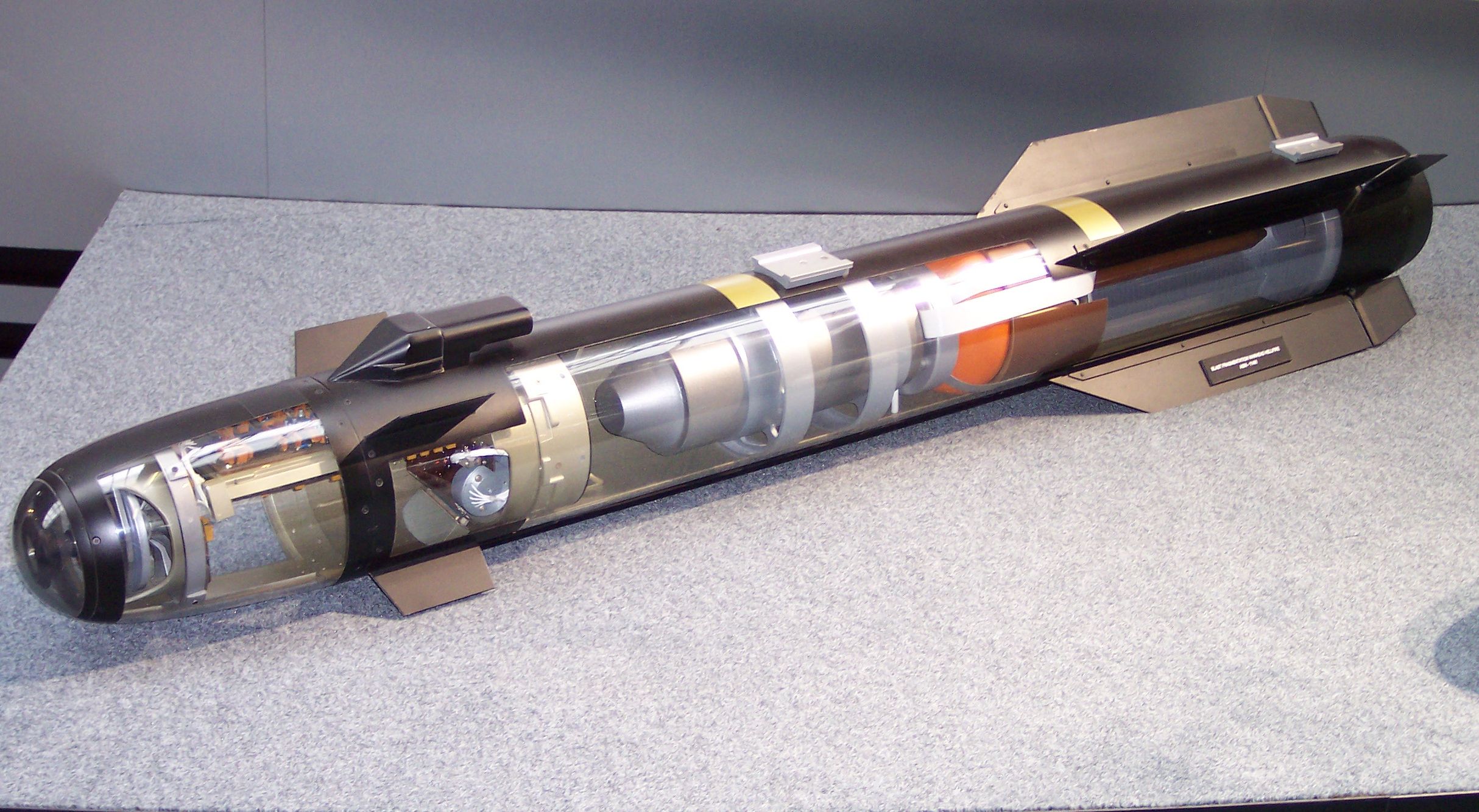
| Drones used missiles with knife warhead to take out single terrorist targets - Ars Technica Posted: 09 May 2019 09:47 AM PDT 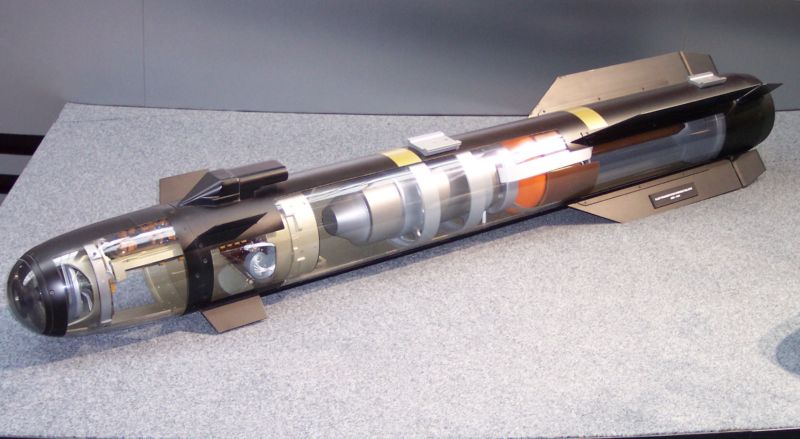 Enlarge / A see-through model of the original Hellfire missile. Imagine the center replaced with a set of pop-out blades, and you've got the "Flying Ginsu." Lockheed Martin Drone strikes have been the go-to approach by both the US military and the Central Intelligence Agency to take out terrorists and insurgent leaders over the past decade, and the main weapon in those strikes has been the Lockheed Martin AGM-114 Hellfire II missile—a laser-guided weapon originally developed for use by Army helicopters as a "tank buster." But as concerns about collateral damage from drone strikes mounted, the DOD and CIA apparently pushed for development of a new Hellfire that takes the term "surgical strike" to a new level, with a version that could be used to take out a single individual. The Wall Street Journal reports that just such a weapon has been developed and deployed on at least two occasions, based on information provided by multiple current and former defense and intelligence officials. Designated the Hellfire R9X, the missile has no explosive warhead—instead, its payload is more than 100 pounds of metal, including long blades that deploy from the body of the missile just before impact. "To the targeted person, it is as if a speeding anvil fell from the sky," according to the WSJ. Some officials referred to the weapon as "the flying Ginsu," because the blades can cut through concrete, sheet metal, and other materials surrounding a target. The R9X was developed in part as a response to President Barack Obama's mandate to reduce civilian casualties in drone strikes, especially in light of the tactic adopted by leaders of targeted terrorist and insurgent organizations (such as the leaders of the Taliban and Al Qaeda) of using women and children as a human shield in hopes of avoiding drone strikes. While the missile was apparently in development as far back as 2011, the exact timeline of development was not revealed by officials; a similar weapon was considered as an option to take out Osama bin Laden at his compound in Pakistan before it was decided to send Navy SEAL operators in instead. According to the Journal's sources, the DOD has only used the R9X about six times. The Journal confirmed two strikes—one, in January of 2019 by the Air Force against Jamal al-Badawi, the individual accused of being the mastermind of the bombing of the USS Cole (a strike that the Pentagon has officially acknowledged, but without disclosing the weapons used); and a CIA strike against Al Qaeda leader Ahmad Hasan Abu Khayr al-Masri in February of 2017. In both cases, the strikes took out the targets but did not blow up the vehicles they were in—in the case of the attack on al-Masri, there was only a hole in the roof of his Kia and a crack in the windshield.  |
| The Universe Probably 'Remembers' Every Single Gravitational Wave - Live Science Posted: 09 May 2019 04:48 AM PDT  Gravitational waves may leave a lasting mark on the universe. Credit: ShutterstockThe universe might "remember" gravitational waves long after they've passed. That's the premise of a theoretical paper published April 25 in the journal Physical Review D. Gravitational waves, faint ripples in space and time that humanity has only in the past few years managed to detect, tend to pass very quickly. But the authors of the paper showed that after the waves pass, they might leave a region slightly altered — leaving behind a sort of memory of their crossing. These changes, which the researchers termed "persistent gravitational wave observables," would be even fainter than the gravitational waves themselves, but those effects would last longer. Objects might be shifted slightly out of place. The positions of particles drifting through space might be altered. Even time itself might end up slightly out of sync, running briefly at different speeds in different parts of Earth. [9 Ideas About Black Holes That Will Blow Your Mind] These changes would be so minuscule that scientists would barely be able to detect them. The researchers wrote in their paper that the simplest method for observing these effects might involve two people "carrying around small gravitational wave detectors" — a joke because detectors are quite large. But there are ways researchers might detect these memories. Here's the most obvious one: looking for shifts in the mirrors of existing gravitational-wave detectors. Right now, scientists can detect gravitational waves by building observatories that fire very still and stable laser beams over long distances. When the beams wiggle slightly, it's a sign that a gravitational wave has passed. By studying the wiggles, physicists can measure the waves. The first such detection was in 2015, and since then, the technology has improved such that the observatories detect gravitational waves as often as once a week. Those waves originate from massive events, like when black holes and neutron stars collide very far away in space. By the time they reach Earth, though, the waves are barely noticeable. Their long-term effects are even less evident. But the mirrors in detectors are constantly measured in such a precise way that, over time, the shifts that the gravitational waves cause might become so intense that researchers will be able to spot them. The researchers came up with a mathematical model that predicts how much the mirrors should shift over time with each wave passing. The other methods humans might use to detect these long-term effects involve atomic clocks and spinning particles. Two atomic clocks placed some distance from each other would experience a gravitational wave differently, including its time-dilation effects: Because time would be slowed more for one clock than the other, subtle differences in their readings after a wave passed might reveal a memory of the wave in the local universe. Finally, a tiny spinning particle might change its behavior before and after a wave's passing. Suspend it in a chamber in a lab, and measure its rate and direction of spin; then measure it again after a wave passes. The difference in the particle's behavior would reveal another kind of memory of the wave. This theoretical paper, at the very least, gives scientists an intriguing new way to look at building experiments to study gravitational waves. Originally published on Live Science.  |
| You are subscribed to email updates from "single" - Google News. To stop receiving these emails, you may unsubscribe now. | Email delivery powered by Google |
| Google, 1600 Amphitheatre Parkway, Mountain View, CA 94043, United States | |


Comments
Post a Comment